WebSpeaker Product Update: May 2026
Product update: May 2026
This is a retrospective summary of what we implemented during May 2026.
Richer source metadata
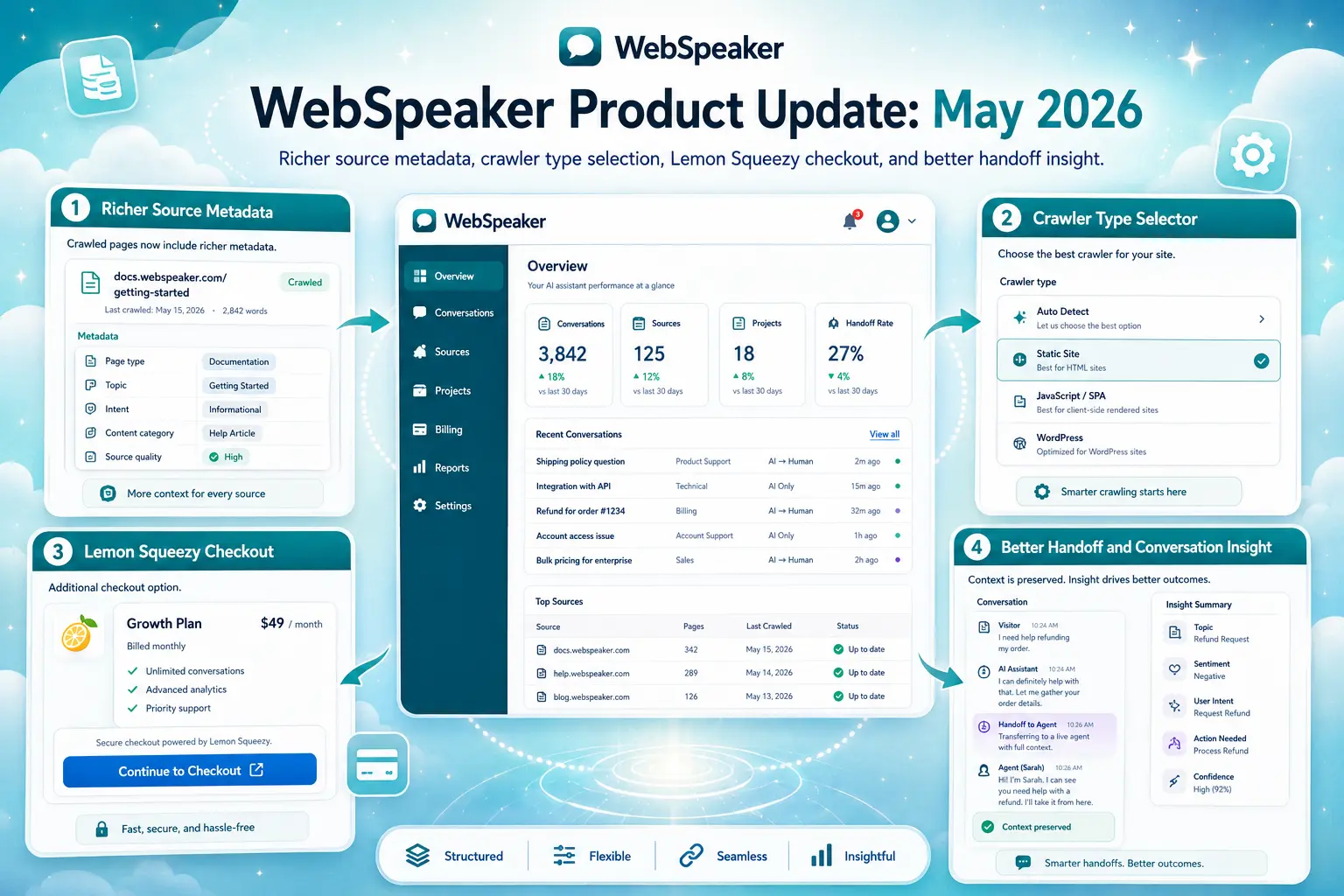
The assistant used to work from fairly thin context about each page it pulled into an answer: little more than raw text, without much sense of what kind of page it actually came from or what it was for. That made it harder for the assistant to weigh one source against another when putting an answer together. In May we added a second generation of generic source metadata to the scraping pipeline, alongside broader page metadata, so each crawled page carries more structured information about its own content. The benefit is a better understanding of what each source page is about, giving the assistant more to work with when it decides which sources are actually relevant to a question.
Crawler type selector
Not every website is built the same way, but the crawler previously had to work that out on its own before it could start pulling in pages, which occasionally meant extra delay or a mismatched approach for less common site setups. We added a crawler type selector to the UI, so you can choose the crawler type directly when setting up a project instead of leaving it entirely to automatic detection. The benefit is that you can match the crawler to how your site is actually built, which is especially useful for setups our detection does not handle by default.
Lemon Squeezy checkout
Billing options were more limited than we wanted them to be, which meant fewer ways for customers in different situations to actually complete a purchase. We added a Lemon Squeezy checkout redirect as an additional billing integration alongside our existing setup. The benefit is a streamlined, additional way to subscribe, so more customers can pick a checkout flow that works for them. You can see current options on our pricing page.
Better handoff and conversation insight
Escalating a conversation to a person used to lose some of the context that had already built up during the chat, and conversation management views did not show much about what a conversation was actually about beyond the raw messages. In May we completed a memory-aware handoff for the chatbot, so escalations carry more of what was already established in the conversation, and we added AI analysis directly into conversation management views. The benefit is a smoother escalation when a visitor needs a person, and more insight into what is happening across your conversations without having to read every message yourself.
Together, May’s work gives the assistant a better sense of what each source page is about, lets you match the crawler to your site instead of relying only on automatic detection, adds another streamlined way to check out, and makes escalations and conversation review noticeably smoother. We will keep sharing what we build, month by month.